participants

Presenters

Invited Artists

Marc Lancet

Yohen: Changed by Fire
Notes from Japanese Wood-fired Ceramics
By Masakazu Kusakabe and Marc Lancet

Presenter: Marc Lancet
(download the msword file)

Opening Comments

A year ago, Japanese Wood-fired Ceramics, a species of Field Guide to Wood-firing, made it to the bookstores. It has been a long journey. The book is the culmination of over 15 years of collaboration with Japanese master potter Masakazu Kusakabe. For the last five years the two of us traveled back and forth between Northern California and Miharu, Japan to create this book. 

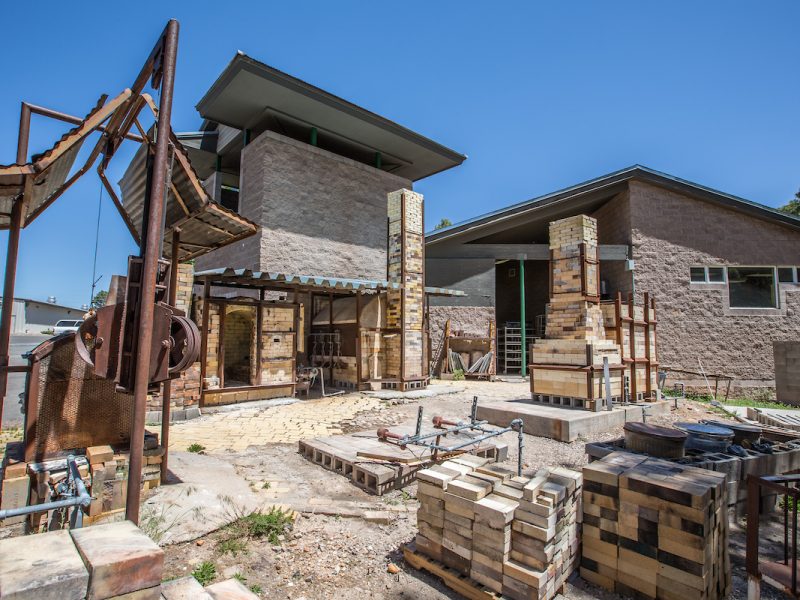
I met Kusakabe-sensei in 1992. I was on sabbatical and had asked my brother Barry, who lived in Tokyo, to help me find a way to get involved in Japanese ceramics. He contacted his friend Masakazu Kusakabe who generously invited me to come to Japan and work with him. I spent six weeks working with him in his studio and firing his double chambered kiln. A few years later Kusakabe left Japan for the first time in his life and we began what became an annual collaboration of workshops, exhibitions, firings and eventually led to building the Dancing Fire Wood Kiln at Solano Community College in 1998 and the book in 2005.

I wanted to offer greetings from my co-author Masakazu Kusakabe. When I told him I would be speaking to you about the book I asked him to send me some words to pass on to you. I have edited them a little for clarity but have tried to leave his words mostly in tact to capture a bit of his great spirit.  

From Kusakabe:

          “We know that this is very exactly how to wood fire book, but we also commented that most important is not only ceramic but human relation ship. If I did not do wood fired ceramic only gas & electric kiln, I never meet Marc Lancet and other wonderful potter and nice people. I was very luck man. When I started wood fired ceramic young age, I could visited many ceramic place.  I can meet short moment and greeting some of Japanese famous national treasure potters They inspired me something good about future wood fire ceramic. First time Marc visit to me and we did wood fired ceramic by kiln and, Marc said to me “ Kusakabe you fire up not only ceramic but human relationship with your kiln”  I was very satisfied by Marc’s saying, Wood-firing  is difficult and hard & some of secret, but if you can meet not only nice teacher or master but good craft man or collector or nice artist friends, you can learn anything about ceramic information, but what is more interesting is a wide, large art feeling & knowledge.
         Now, I want to say that: Please do try not hurry up How to wood fire ceramic, If you meet nice & good potter, you can understand very naturally with good timing & good text book. You have to know about your readiness.  I tell my workshop's students that [you have to waiting and standing for wood fire ceramic]. Wood fire ceramic take ripeness time like a wine by wood fired potter. 
This’ our book have so many information & how to from Kusakbe's 40 years &  Marc' 30 years of experience. We try best with nice staff, but we can not do perfect, but I hope that our book help mysterious ceramic space and understood wonderful wood fired ceramic world for reader.
I always remember SCC's students face & talking with me. I am always being with your nice students and staff specially when you are going to firing Dancing Fire Wood Kiln near by Marc.
         Please say students again Kusakabe is being your hand and tool and clay and also I help their working with my spirits.”

Introduction

Yohen – Literally translated means changed by fire. It is the term that is used to refer to wood-fired effects. My experience is that when you light a wood fire kiln little remains the same. I will address 3 ways that I have come to understand Yohen.


  • Personal Yohen -- How are you changed by wood-fire? All of us have chosen wood-firing and I think without much contemplation you will find you are quite changed by your practice of wood-fire.
  • Yohen – Wood-fired effects are at the heart of our book. Chapter 2 offers a field guide to wood-fired effects, not just naming and describing them but talking about what causes these effects. And by extension, how you can encourage or avoid them. This in-depth understanding of wood-fired effects has become even more vital to today’s contemporary wood-fire artists for reasons I will elucidate.


  • Community Yohen --- Wood-fire impacts your community relationships. The fire both 1) locates you in the larger community and 2) teaches you how to create functional community experiences. You are often located in the larger community by the columns of smoke you produce. I want to talk a little about how to prepare your larger community for the wonders of having a wood-kiln in their midst. And also, I want to address the remarkable laboratory for experiencing human relationships that wood-firing offers us.


1) Personal Yohen

How are we changed by wood-fire?

I did call you all fellow aesthetic lunatics in my opening comments and I was quite pleased to hear Daphne Hatcher holds the same opinion of us all. If you define crazy as “outside the norm”, then you have to admit that most of us here are way outside the norm of 21st century living.

We work hard and long. We are practicing an art that is 1000 years old. Wood-firing was developed at a time when “labor” and “saving” were never used in the same sentence.  

Our lives reorganize. Yohen, we are changed by fire. We have to make room both physically and in our busy schedules to locate, transport and then split wood. We have to prepare wadding and clean shelves and crawl into small spaces for hours to load our kilns. I am not even speaking of the time it takes to create work that merits this kind of effort to fire. This concentrated effort stems from and ancient practice and does not fit easily into the contemporary 21st century lifestyle.

We, in this room, are artists who choose wood-fire. Perhaps the most significant fact about contemporary wood-fire is that artists choose it as a means of expression. One thousand years ago there was only wood-fire and no choice to be made. In the 21st century, –  an age when kilns are computer driven providing almost effortless firing – artists choose to wood-fire; engaging in lengthy preparation, round the clock firing. Again it is important to restate that while in  the past there was no choice, now we have gas kilns, electric kilns, raku kilns, and even Steve Davis’ Kazagama to choose from.

Why do we choose wood-fire?

I can not over emphasize how significant it is that in the face of labor few would accept we make this choice to wood-fire. To cite the quintessential portrait of the artist in modern cinema, I quote Richard Dryfus’ lines in Close Encounters of the Third Kind. Dryfus, in a trance has spooned all the mashed potatoes on his dinner plate and is obsessively sculpting his vision of a mysterious mountain. Suddenly aware that his behavior has startled his family he looks up and says in a plaintive almost pleading voice what I believe I have been saying as an artist all of my creative life, “This is important! This is really important! “ Dryfus cries, making explicit that which often goes unsaid in our contemporary world This choice of intensive labor which is not easy to fit into a 21st century life has tremendous implications for understanding our work as fine artists.


.           In the face of labor few would accept, we choose to wood-fire. There can only be one explanation. It must be about the beauty, yohen, the beauty of the wood-fired surface.

In Ted Adler’s important and inspiring remarks yesterday, he observed (and I take great liberties in paraphrasing here) that wood-fire artist will eliminate themselves from serious consideration in the fine art dialogue if they continue to repeat the same old words, again and again, dwarfing and drowning their accomplishments in words that may become trite and cliché in constant repetition. He calls for deeper consideration, fresh insight and more discriminating awareness on the behalf of wood-fire artists. There is great truth in his brilliant comments. There was a moment at the end of his talk when he offered as almost a consolation that, he too loved wood-fire that he saw, indeed felt the unique beauty of a wood-fired object. Then he went on to say, in conclusion that the only true concern of a contemporary artist was meaning. And I wanted to say to Ted, to take a step back. You had it. Right then when you found yourself transported by the beauty of a wood-fired object. That just might be meaning enough. In the presence of a Rothko, we can be transported by the sublime beauty. We know what it means. We feel it. But we do not need to ask, “What does it mean?”

We chose wood-fire because of beauty. And not an “oh that’s lovely,” casual sort of beauty, An extraordinary beauty, a heart-achingly arresting beauty, a beauty of epic proportions, a beauty worth working for, a beauty only achievable by way of wood-firing.

Can it be anything less? What else could motivate artists to dedicate so much time and effort? We artists are always searching for an external expression that matches our inner vision and that is what we have found in wood-fire.
            . 
So if we are crazy, and I think I have made a good case for our group insanity, it is a lunacy for the best of reasons -- The reason that artists have always stepped outside the accepted norms to achieve creations that last through time. I think of Rodin working on the commission of Balzac. He was eight years late in delivering it. He made over 80 maquettes and studies for the sculpture, many full sized works. He managed though his iconoclastic focus on a personal vision to create a sculpture that transformed public monumental art in a way that has only been achieved since by Maya Lin’s Vietnam War Memorial. And I think of Pollack, laying out vast vistas of canvas on his garage floor and grabbing the house paint, acting with courage and conviction, inventing a new way of knowing art, a way without precedent. And we are no different though what we may accomplish is still before us. As artists, we go where we must, we do what we must to manifest what we envision.


2) Yohen – Wood-fired effects.

In chapter 2 of Japanese Wood-fired Ceramics,  Yohen – Changed by Fire, wood fired effects are described according to appearance, location in the kiln and methods of creation. Our intent with this section was to provide a beneficial guide for artists.  In addition, the Yohen section of the book may offer us a vital tool in the necessary task of educating the public to the rich and subtle beauties of wood-fire.

Though I have come across it before, I have been startled by the pervasiveness of the myth that all wood-fired ceramics are either brown or green. This is a misconception that is not only found among the general population but also among ceramic professionals. I have been somewhat dismayed to here among my fellow presenters here the occasional reference to “brown pots” or “all those ash covered pots that look identical”. I was first alerted to the seriousness of this misinformed view when I was speaking to the senior editor of the Lark Publications. You are most likely familiar with their 500 series, 500 bowls, 500 tea pots, 500 reasons not to vote republican, 500 plates, 500 vases etc…

So you can imagine what I suggested. I told her I would love to help with a 500 Wood-fired Ceramics book. She said that they had already thought of that, they had gathered photos and looked at them and found that they all looked the same, all the brown and green pots. I was stunned to hear such a poorly informed view from someone who was producing books that were so influential to my field. I told her that my partner was a bird watcher. And before I started dating her, I thought all birds were either brown or gray or with good luck I might see a blue one. But when I really looked at birds seriously for the first time in my life, I discovered that there existed a world of beauty and design, literally under my nose, that I had never before imagined. I talked of the remarkable subtlety of color, the rhythms and patterns, the endless variety of design and proportions. I said that if all she saw was brown and green pots, she did not yet understand how to truly look at wood-fired ceramics.

In reality, wood-firing may be among the most subtle and complex surface development in ceramic art. The Yohen chapter of our book is offered as an introductory guide to help where it can identify what is happening and how to encourage or discourage certain effects. I also now review some of the effects covered in Chapter 2 as an antidote to cure the myth of brown and green pots.

Some examples from the Yohen section

  • Flame Related Effects
    • Hiiro – Flame marking – Occurs at a distance from the flame source on the surfaces of pieces with only light ash on their surface.
    • Hishoku – Carmine red hiro.
    • Nuke – Marks formed when hiiro is obstructed partially or completely by wads or pieces loaded in close proximity. .
    • Bota Mochi – Red Bean Rice Cake – Round nuke markings, tan to reddish brown in color.
    • Himado – Special door or window shaped nuke
    • Nuke by intention. Shaping and/or placing wadding for decorative effect.
  • Shizenyu -- Ash Related Effects
    • Gomabai – Sesame seed shaped ash spots.
    • Melon-hada – Melon texture – earliest stage of ash melt.
    • Enoki-Hada – Tree Bark – The earliest stage of re-melting of ash that has melted and cooled.
    • Shimi – Small pinholes from reduction cooling followed by a temp rise in oxidation.
    • Hanten – Spots on Natural ash glaze.
    • Amibai – Intricate netting pattern that occurs just before dripping (tamadare).
    • Tamadare – Running drips with a ball at the end.
    • Biidaro – Kiln tear drop, Glossy blue or green ball of a natural ash glaze drip.
    • Yu – Damari – Pools of natural ash glaze.
    • Shinshoku – Erosion effects caused by extensive ash combining with clay and dripping, carrying away the clay.
  • Ember Related Effects
    • Sangiri – Variety of colors on a light ash surface which occurs when the piece is buried in embers towards the end of the firing creating a varied reduction over the surface of a piece
    • Koge – Burned Rice – Extended contact with embers most often in the firebox.
    • Korogashi – Ember diving. Pieces accidentally fall or intentionally pushed into the ember beds.
  • Clay Body Related Effects
    • Ishihaze – Cracks around silica or feldspathic rock
    • Tombo No Me – Dragon Fly eye – Smooth white spots from melted feldspathic or quartz rock
    • Kani No Me – Crab eye – Tombo No Me with a hole in the middle
  • Yohen From Applied Materials
    • Hidasuki – Markings left on pots wrapped with rice straw or wild grasses.
  • Accidental Yohen
    • Cracks and Fissures
      • Kire, Hibi, Ware
      • Yamakizu – Beautiful cracks
      • Yamaware – Beautiful Fissures
      • Tsubure – Major breaks
    • Buku -- Bloating
    • Hitsuki – Pieces that stick together
    • Furimono – Pieces of material that fall from the kiln roof and stick to the ceramic pieces.
  • Mixed Yohen – A combination of any or all of the effects listed above.

Other Technical aspects of the book

  • Kiln Building
    • Chapter 3 – Dancing Fire Wood Kiln
    • Chapter 4 – Sasukenei Smokeless Kiln
  • Chapter 8 – Loading Theory, Strategies and Practice
  • Chapter 10 – Unloading
  • Chapter 7 – Wadding – a very thorough discussion of wadding in the chapter on preparation before the firing. 
  • Chapter 9 – Firing (a thorough explanation)

It was mentioned in an earlier panel that you should choose your kiln according to the work you make. And then, once built, your kiln will change your work. Wood-fire does change our work. I offer a few examples from my own work in wood-fire

  • Flame response to form – There is a chiaroscuro of fire. It is a reverse chiaroscuro. On textured and gouged surfaces, the ash leaves off where it can no longer reach, the vapors carried by flame reach deeper and then the bare clay is exposed in the deepest recesses. If you use an iron free clay body then the deepest fissures are light in color offering a reverse of traditional chiaroscuro. This flame and ash response to textured surface has lead to the creation of the Luminous series, highly textured figurative sculptures. All my ceramic sculpture is becoming increasingly textured. I find that my forms and textures are determined more and more by my understanding of wood-fire effects. As I am working in the plastic clay, I find myself creating forms and textures that I think will respond well to the ash deposit and flame passage.
  • The Fire paintings series resulted from years of admiring wood-fired effects on my tea bowls. I wanted to be able to contemplate these qualities as I do a painting on the wall. This led me to create large ceramic panels that I would paint with slips, stains and glazes and then place in the flame of the wood-fire for an overlay of subtle and bold shifts in color and surface. The resulting fire paintings satisfy my longing to be able to lose myself in the contemplation of the beauty of wood-fired effects as I wood in a great painting.  

Kusakabe and I see this book as the opening of a dialogue. We set goals for ourselves when we began writing almost six years ago. We wanted our book to be comprehensive. We insisted that it be accessible, easy to understand and user friendly. We checked ourselves again and again to insure we were not making assumptions about what our readers already know. Finally, we hoped to create a text that would aid beginner and advanced practitioner alike. Our working model is one of experimentation and discovery and we look forward to the dialogue of discovery within this remarkable wood-fire community.


3) Community Yohen

A wood-kiln both locates you in the larger community and teaches you how to create functional community experience.
 

  • Proactive, Positive Publicity for Your Kiln.

Since building a kiln will almost without exception be noticed in your community since you are often located in the larger community by the columns of smoke you produce.  It is an excellent idea to proactively let your presence be known in the most positive light in advance of your first firing.
1. Be Proactive and set a positive tone.

      • Fund raising. – Fund raising for the Dancing Fire Wood-Kiln at Solano Community College was a two year process and served to inform much of the community and literally get by in from the campus community, neighbors and local businesses.
      • Using the media. Buy the time we unloaded our first firing, the local news paper had printed five full color full page articles about the fund raising, building, firing and unloading of our new kiln designed by Japanese Master Potter Masakazu Kusakabe. The NBC local news affiliate station broadcast live twice from our kiln. First during the second firing and again during the unloading. These efforts not only helped inform the public as to the educational, cultural and artistic value of our new kiln but it established the kiln as a valuable and rare addition to our campus. This would be important in staving off complaints that were raised by a vocal minority. The internet could be a valuable source of putting out positive information about your kiln. Our kiln was featured in an end of the year wrap up in our local paper, the year it was built and first fired. The article listed the best and worst of the year. Our kiln was listed first as the best thing that happened in Solano County in 1998.
      • Ever since the first Raku firings, potters have known how to make a round of visits to the neighbors, with a pot as a gift while telling them about this exciting new way of working. You might also tell them you have lots of ways to help them rid themselves of unsightly piles of chord wood.
      • Required by our safety committee to inform the campus community before every firing, we generated the Dancing Fire Wood Kiln Newsletter. This letter not only invites everyone to visit during the firing, but is an opportunity to educate everyone on the great things happening at the kiln, tout student and faculty accomplishments and discuss important ideas.
  • Eyes Get In Your Smoke – Dealing with the Psychological and Real Concerns About Your Kiln.
    • The Bay Area Air Quality Management District

No matter how well you have proactively prepared your community for wood-firing, you most likely will have some challenges. Eyes get in your smoke. That is to say that smoke has a psychological impact on the viewer. I have watched people well up wind of the smoke, look up, see the smoke and begin to cough. This is just a natural psychological response to the smoke we produce. Occasionally – in part because, people’s capacity to be discontent is not related to actual events but to their own psychological makeup – these people may actively seek to prevent future firings.

The Dancing Fire Wood Kiln at Solano Community College has a history of being turned in by anonymous complaint to various regulatory agencies. This has nothing to do with smoke emissions but rather resulted from an unfortunate altercation with an administrator during a meeting on a completely different topic. He was definitely the wrong man to cross. This Administrator called several regulatory agencies. I learned a great deal from my years of working with these regulators. I thought I would describe a few of the lessons that might be of value to other kilns.

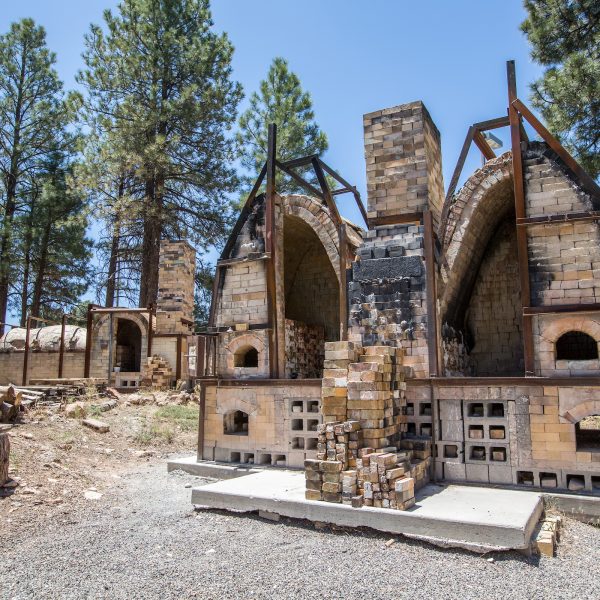
The Bay Area Air Quality Management District inspector showed up in the middle of a firing. This is the agency responsible for regulation air quality in the greater San Francisco area. I had received approval for building and operation of our Dancing Fire Wood Kiln. I called them in 1997 and spoke with an engineer describing our kiln, how it worked and how often we would fire. He explained that we did not need a permit to operate because 1) we were periodic and our frequency of operation (3 – 5 times a year) was not the focus of their regulatory concerns and 2) being a school, or kiln of concern to BAAQMD. My first lesson: get such approvals in writing. The engineer assured me I did not need any permit and that I did not need to seek approval from the agency. What he did not tell me is that their agency must respond to every complaint and that should a complaint be lodged, they would have to send an inspector to assure compliance with BAAQMD standards.

While introducing myself to the inspector I told him that we would do everything  to meet standards. I told him that when the Chevron processing plant up the road emitted toxic vapors, I wanted the Bay Area Air Quality Management inspectors on the case. I said that since I believed in and in fact relied on environmental regulation for protection, I had to agree that we should bare the same scrutiny. The inspector, unused to such a welcome was quite helpful and even offered suggestions as to where we could find wood. He also explained why burning wood was more environmentally sound than burying it in a land fill where the anaerobic bacteria would produce green house gasses that would leach to the surface.

The regulator worked with me for over ten hours, orienting me to the labyrinth of regulations and laws concerning airborne emissions. Our kiln, as most kilns do, failed to pass the opacity standard. The smoke may not maintain a certain degree of opacity except for very short periods. While this regulation was meant to govern constant operations and not periodic firings that only briefly emitted opaque black smoke, there was no distinction made in the regulation. The regulator agreed to give me time to respond to his report and pointed me to the web site where all their regulations and requirements were available for review. It was clear that he and his colleagues did not want to be in the business of regulating a college kiln into dormancy but it was equally clear that with a complaint on the books, they had no choice.

I should point out, that one solution to this problem would be to build the Sasukenei Smokeless kiln described in Chapter 4 of Japanese Wood-fired Ceramics.

After days spent reviewing the regulations on line, I came across a small clause that exempted college physics and chemistry laboratories from regulatory scrutiny. I wrote the agency and told them that our kiln was not different. It was a college learning laboratory where students make informed hypotheses about the nature and impact of wood-fire on ceramic materials, compose often elegant experiments to test their hypothesis and then they run the experiments by firing the kiln. The BAAQMD personnel happily accepted the explanation and we now have approval to operate our kiln.

    • CALOSHA

CALOSHA was our next hurdle. The same administrator who had anonymously turned us into the Bay Area Air Quality Management District had turned us in to CALOSHA claiming that we were filling the next building with smoke creating a hazardous working environment for faculty and staff. This is the area of concern for CALOSHA. They are responsible for protecting employees and insuring safe work environments.

CALOSHA sends a letter, notifying us of the complaint. When you receive a complaint notification letter you must respond with a letter of explanation and a plan to address the problem. We hired an environmental quality testing company to measure kiln output during a firing. They placed sensors in the building sited in the complaint, the art building, next to the kiln and directly down wind of the kiln. The recordings from the sensors refuted the complaint and demonstrated that we were well below emission standards. The sensor registering the most emissions was still 17,000 times lower than allowable emissions.

    • The Campus Safety Officer

Unfortunately, the newly hired campus safety office was placed under this administrator’s supervision. The administrator told him what a terrible hazard the kiln was and then pointed the safety officer right at the kiln and instructed him to conduct a secret inspection. Not surprisingly, the safety officer produced the required report, condemning the kiln and using terms like “tragic loss of life”. The report was not researched and was poorly informed. I went through the one page report line by line and produced a thoroughly researched 14 page response with appendices. As and example of the type of accusations we faced. The safety office pointed out that our chimney was shored up with mild steel angle iron which would soften during the firing, leading to a collapse of the chimney and to the aforementioned tragic loss of life. I researched mild steel with an engineer and discovered that it actually gains strength up to 800 deg. F. So our chimney was getting stronger during the firing, not weaker. The head of the safety committee, told me after reading my report and after sitting through almost 3 years of unfounded complaints about the kiln, that if we ever did find something wrong with the kiln, the committee’s budget would be used to pay to have it fixed.
 

    • Lessons Learned

My years of working with real and imagined complaints about the kiln taught me some lessons about diplomacy and problem solving. I learned that a considered and thoughtful response got me a lot further than my usual tendency towards smart and snappy rejoinders. When my responses were reasoned and my demeanor reasonable, people had confidence in me and by extension, the wood kiln. I also learned that perseverance is often rewarded.
  

  • Community Yohen

One great question of wood-firing is why does working so hard make me so happy? Why after days of splitting wood, grinding debris from kiln shelves, and firing do I feel so good? How can we be so fulfilled after stepping away from every daily routine and scheduled commitment in order to wood-fire?
Perhaps the answer lies in the communal imperative of wood-firing. If you want to fire with wood, with the exception of those that have very small kilns, everyone needs help. Much has been written about the increased isolation that accompanies technological advance. People spend more time alone in front of a computer, processing words or surfing the Internet. It is now a common sight to see people walking together or dinning together while each of them is talking with someone else on a cell phone. Family life is challenged by the increase in single parent homes and the increase in the number of families where both parents work. It is not unusual for people living in close proximity not to know their neighbors. In light of the growing isolation of modern life, it becomes increasingly clear why people are attracted to a gathering of like-minded individuals interested in working hard together on something of value: To know that, in participating in a communal effort – here, a wood-firing that produces a uniquely beautiful form of art – they belong to something that persists.

Learning about human cooperation and collaboration in the wood-fired community has been more rewarding than I could have ever predicted. Recently I have become fascinated by the challenges presented when loading the kiln with 20 student artists. I have found that the kiln presents a perfect microcosm of our world. There is just this much space and we will only be able to get a certain amount of work in the kiln. Approaching our 10th year with the kiln, I find that my students are more experienced. I ask them “How do we load the kiln fairly? The discussion that ensues is enlightening. At a time when our nation is more and more concerned with funneling our recourses into the pockets of the wealthiest, my students are learning how to look out for each other, how to load each piece as if it was their own, how to advocate for their own work while recognizing the needs of their fellow artists. I encourage you to take full advantage of the opportunities that arise when loading and firing a wood-kiln to study and develop your collaborative and cooperative abilities.

I am honored to be speaking to you. I feel fortunate to participate in the wood-fire community with you all. I and my collaborator Masakazu Kusakabe view our book as the beginning of a dialogue that we hope continues within this community for many years to come. We hope to share a stoking shift with you in the not too distant future.