ITEP Home
TRIBES & CLIMATE CHANGE PROGRAM Home
Contact Us
About Us
Home
ITEP Tribes & Climate Change Staff
Climate Change Advisory Committee
Basic Info
Home
Agriculture
Alaska
Forests
Freshwater
Health
Oceans
Pacific Northwest Fisheries
Rangelands
Species
Traditional Knowledge
Weather
Tribal Profiles
Home
Alaska
Great Lakes
Gulf Coast
National
Northeast
Pacific Northwest
Prairies Region
Southwest
Tools & Resources
Home
Funding
Newsletters
Adaptation Planning Tool Kit
ITEP Reports
Mindmap
Trainings & Events
Home
Trainings Schedule
Webinars Schedule
Webinar Archive
Webinars 2023
Webinars 2022
Webinars 2021
Webinars 2020
Webinars 2019
Webinars 2018
Webinars 2017
Webinars 2016
Webinars 2015
Webinars 2014
Webinars 2013
Arctic Rivers Project Webinars
Events Calendar
Southwestern Tribal Climate Change Summit
National Tribal & Indigenous Climate Conference
Search
"Thus, we're also gathered and presented traditional ecological perspectives from Native elders and other tribal voices."
"Climate change is a complex problem stemming from unsustainable policies and practices in almost every corner of the world."
"In rural Alaskan communities, the value of the land is of significant importance, and the connection is vital."
"Communities, already challenged by water availability, will most likely be forced to deal with lengthening periods of hot, intense drought."
Welcome to the ITEP Tribes & Climate Change Program
Call for Proposals Now Open
»
Presentations
.
»
Working Groups
.
»
Trainings
.
»
Climate Conversations
.
National Tribal & Indigenous Climate Conference
»
More Information
.
Community-Led Relocation, Managed Retreat, & Protect-in-Place Coordinator Cohort
»
Visit Our Website
!
»
Learn More!
»
Recording Available
.
»
Indigenous Peoples Terminology for the Fourth National Climate Assessment
»
Click here for more info
.
»
2021 STACC Report Now Available
»
Webinar Recording
What's New....
Upcoming Events Tribal Climate Change
Newsletter - sign up now!
Webinars
Advisory Committee
Attend a Training
Contact Us
Tribal Voices
National Climate Assessment: Indigenous Peoples, Lands and Resources chapter
vimeo.com/100528198
YOUTH MADE - Suquamish Coastal America Film
vimeo.com/60703322
Indigenous Food Energy and Water Security and Sovereignty
stemforall2020.videohall.com/presentations/1844?fbclid=IwAR1b8ikEcv0wnr4XgaP1yUIwYpY5mrCLs8EpAAH_bgJ5g-8v16LHOSeh7bE


 Indigenous Food Energy and Water Security and Sovereignty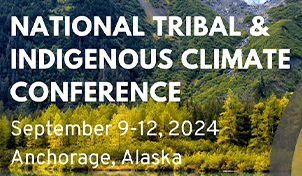


 National Climate Assessment: Indigenous Peoples, Lands and Resources chapter
 YOUTH MADE - Suquamish Coastal America Film